Daily · Post Line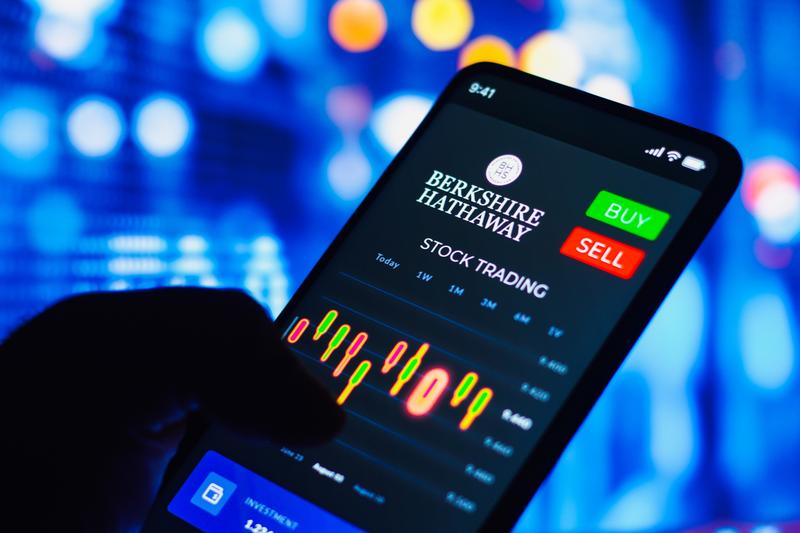
Berkshire Hathaway ( BRKA -0.48% ) ( BRKB -0.41% ) is off to a strong start in its first year under CEO Greg Abel. Second-quarter operating earnings rose 16% from a year earlier. The stock, near $505 as of this writing, puts the company's market value at about $1.1 trillion. Whether the next five years look as good is a harder call. Over a stretch that long, the stock should mostly track two numbers -- how fast operating earnings grow, and what multiple of those earnings investors will pay. Both numbers hinge on what CEO Greg Abel does with the company's $365 billion of cash and U.S. Treasury bills.
Operating earnings are Berkshire's preferred yardstick, excluding stock portfolio gains and losses. During the second quarter, the company earned about $13 billion, with first-half operating earnings totaling $24.3 billion, a 17% increase from the previous year. This growth is a rebound, not a continuation. Operating earnings slipped 6% in 2025, to $44.5 billion, due to weaker insurance results. This year, growth is broad-based outside insurance, with BNSF, energy, manufacturing, service, and retailing groups all showing earnings growth between 10% and 15% year over year. Over four quarters, Berkshire has earned about $48 billion of operating earnings, or roughly $22 per Class B share. At a $505 share price, this results in a valuation of about 23 times operating earnings, a premium price for future growth.
Investors are paying for growth that hasn't fully materialized yet. CEO Greg Abel has started spending Berkshire's cash, which stood at about $365 billion at midyear. In January, Berkshire acquired OxyChem for $9.4 billion, and in late July, it paid $6.8 billion for Taylor Morrison. It also repurchased about $4.5 billion of its own stock in the second quarter, after minimal buybacks in the first. These actions are made in consultation with chairman Warren Buffett.
The company was a net buyer of stocks, with the cost basis of its equity portfolio rising by about $21 billion in the first half. Acquisitions add directly to operating earnings, while stock purchases primarily add dividend income. Buybacks reduce the share count, increasing earnings per share. Meanwhile, the case for leaving cash parked weakens as Berkshire's insurance investment income fell about 8% in the first half due to lower short-term interest rates.
Predicting Berkshire's stock price in five years involves assumptions about growth and valuation multiples. If growth stabilizes at 5% annually and investors use a lower multiple of 18 times operating earnings, per-share earnings would reach about $29 by mid-2031, with the stock near $525. The upside case assumes growth compounds at 10% annually and a valuation near 22 times operating earnings, leading to earnings of about $37 per share and a stock price around $800, representing a 10% annual return. Berkshire's five largest holdings—Alphabet, American Express, Apple, Bank of America, and Coca-Cola—comprise 66% of its $324 billion equity portfolio, but their performance impacts only about 30% of Berkshire's market value. Ultimately, Berkshire's downside risk is low due to its cash reserves, and there are scenarios for significant upside if Abel deploys capital effectively.
The analysis concludes Berkshire Hathaway offers meaningful upside potential with low downside risk, making it a great core investment, even with modest stock expectations.
Source: The Motley Fool