Daily · Post Line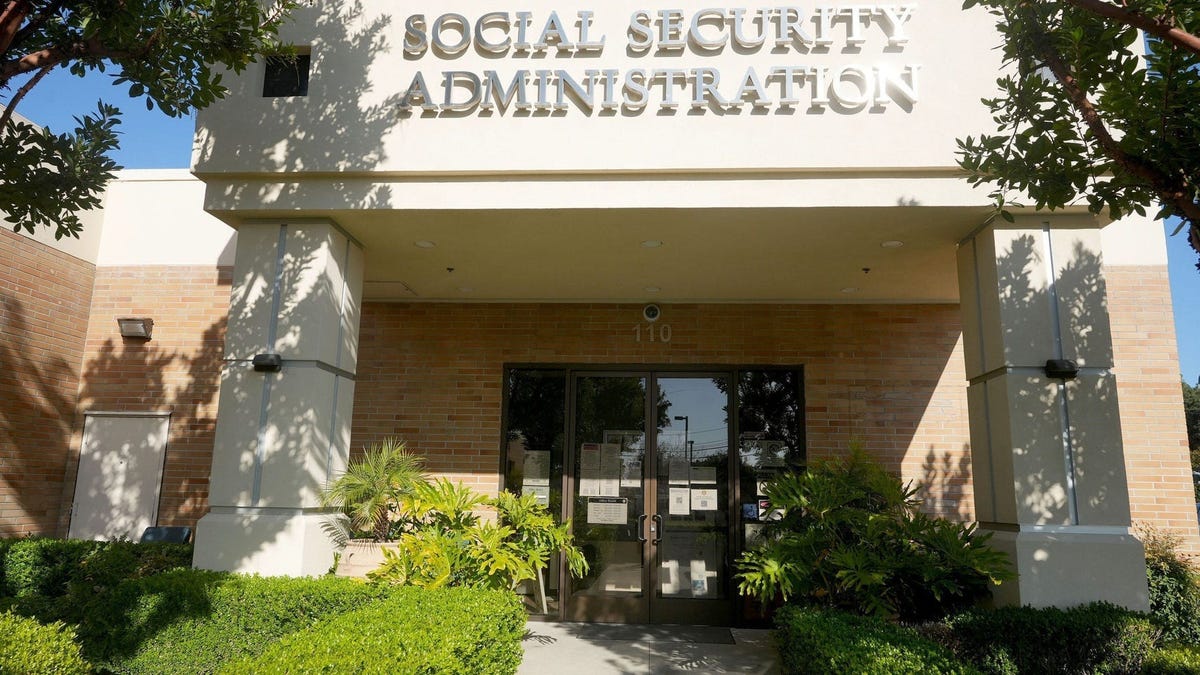
Show Caption Raising taxes is one of many proposals politicians and economists have suggested to prevent Social Security benefit cuts in six years, but that plan could cost a typical American up to $3,000 in annual wages, a new calculator shows. The trust fund that supplements incoming payroll taxes to pay monthly Social Security benefits is projected to be depleted in the last three months of 2032, which would force an immediate across-the-board 22% benefits cut, the latest Board of Trustees report said. To fill the expected funding gap, some politicians and economists are entertaining an increase in the current 12.4% Social Security payroll tax rate, split equally between employer and employee, on earnings up to $184,500 in 2026.
Depending on what the new payroll tax rate target is and assuming no other actions would be taken to shore up Social Security, the median full-time worker earning $61,583 a year would face between $2,617 and $3,024 in additional taxes, according to a report from the Cato Institute, a libertarian think tank. Social Security trustees estimated this year a payroll tax rate of 16.65% would be needed to close the funding gap, while the Congressional Budget Office (CBO) assumed last year that a rate of 17.31% would do the job. "These (tax) increases amount to roughly two months of the median rent countrywide," wrote Romina Boccia, Cato's director of budget and entitlements.
The increased taxes wouldn't necessarily all come from the employee's checks because the payroll tax is split between the employee and employer, but self-employed workers pay the entire combined rate directly, Cato noted. Workers stand to lose more than just wages In addition to the drop in annual income, employees can expect to pay for a payroll tax increase in "hidden" ways, economists said. Economics theory shows "employees pay the employer-side of the payroll tax through lower wages," said Alex Durante, senior economist at the nonprofit, nonpartisan Tax Foundation, in a report .
A CBO analysis showed employees bore 58% of a federal payroll tax rate increase of 1 percentage point in the short-run but in the long-run, workers would actually bear more than the full financial impact. They would end up bearing 152% of the burden if the revenue raised were used for noninvestment government spending, such as transfer payments like Social Security. When money is diverted from reinvestments, economic productivity eventually slows and seeps down to workers benefits and wages, CBO said.
Are there other options to fund Social Security? Many people, including Sen. Elizabeth Warren (D-Mass.) and Sen.
Bernie Moreno (R-Ohio), are pushing Congress to lift the Social Security payroll tax cap , currently at $184,500, so affluent people would pay more to fund Social Security. While that sounds like an easy solution, critics say at the most basic level, the math doesn't work. The Social Security Administration calculates that plan would keep the system out of deficit for only four years before the gap returns.
Other suggestions have included a gradual increase by three months a year in the full retirement age (FRA) of 67 years or capping the dollar amount of the yearly cost-of-living adjustment, or COLA. But both are considered a form of benefits cuts and have also received pushback. According to a 2024 analysis by the progressive Center for American Progress , an FRA of 69 would cut benefits for all new retirees as much as 14.3% by the time it's fully phased in.
Additionally, losses mount with age after accounting for annual COLAs, it said. The median-wage retiree would lose between $46,104 and $99,252 after 10 years of receiving Social Security, CAP said. Meanwhile, a proposed flat-dollar COLA set at the COLA received by a beneficiary at the 20th percentile, would short-change 80% of Americans, said AARP, which advocates for seniors.
Philip Diehl, former U.S. Mint director during the Clinton administration and president of gold and precious metals dealer U.S. Money Reserve, said remedying Social Security's funding gap likely won't be any one solution but a combination of several.
Because the trust fund is forecast to dry up so soon, "we'll have to join hands and jump together," he said. "Everyone will have to take a hit." Medora Lee is a money, markets and personal finance reporter at USA TODAY. You can reach her at mjlee@usatoday.com and subscribe to our free Daily Money newsletter for personal finance tips and business news every Monday through Friday morning.
Facebook Twitter Email
Source: USA Today